Bnder · Aug 3, 2026
Best Intercom and Linear Alternatives for Founder-Led SaaS Teams
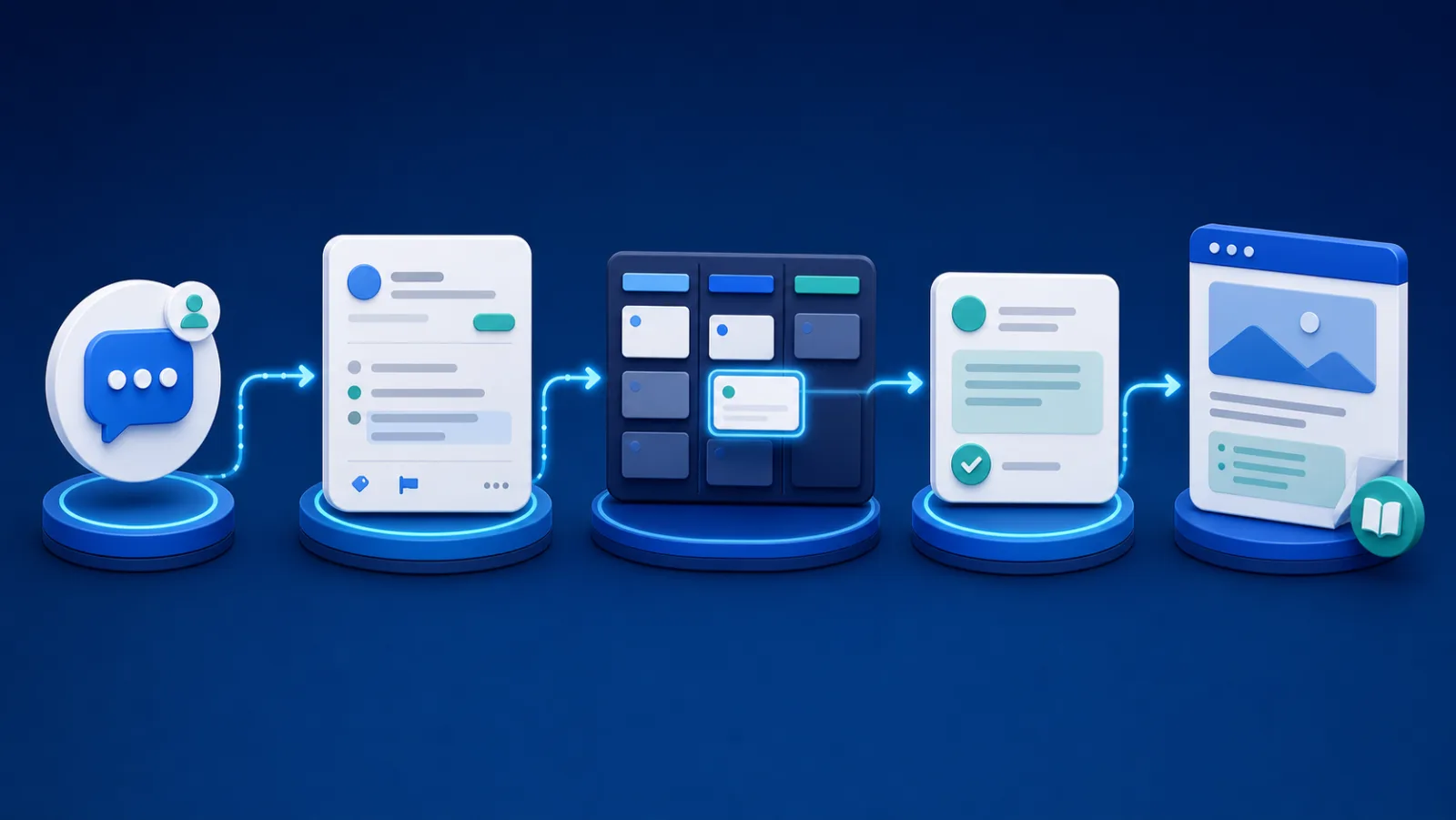
AI-generated illustration.
Intercom and Linear make a credible SaaS stack: customer conversations in Intercom, product work in Linear, and customer requests linked across the boundary. The combination is attractive when messaging and product execution both deserve specialist products.
A founder-led team may still want an alternative. The same person often owns the conversation and the fix, so operating two systems can feel heavier than the work itself. Bnder publishes this guide and is included because it targets that exact stage. Our review methodology covers the ranking and disclosure.
Stack options at a glance
| Option | Keep it when | Main tradeoff |
|---|---|---|
| Intercom plus Linear | Both specialist workflows matter every week | Two systems and an integration |
| Bnder | The same people support and build | Less specialist messaging and planning depth |
| Intercom alone | Product follow-up is lightweight | Not a full delivery tracker |
| Linear plus a simple inbox | Linear must remain the product source of truth | Customer status crosses a tool boundary |
| Jira Service Management | Atlassian and formal service practices fit | More process and administration |
| DevRev | A broader AI/data platform is intentional | Larger implementation decision |
When the existing combination is the right answer
Keep Intercom and Linear when in-product Messenger and AI automation are important, the product team relies on Linear's focused execution experience, and the integration preserves enough context. Replacing a working stack merely to reduce the tool count is not a useful goal.
1. Bnder: one connected workspace
Bnder collects customer requests, keeps conversations as tickets, creates linked product tasks, and publishes internal or public knowledge. It is the strongest alternative when a small group supports and builds the product together.
The gain is a native loop with fewer handoffs. The cost is giving up some specialist depth in conversational engagement and product planning.
2. Intercom alone
Intercom's customer, back-office, and tracker tickets can coordinate work that would otherwise move into a separate tracker. This can be enough when product follow-up is relatively lightweight. Test whether engineering can plan, prioritize, and report on work in the form it actually needs.
3. Linear plus a simple support inbox
Linear Customer Requests can receive evidence from support platforms, email, CRM tools, and Slack. Pairing it with a simpler inbox such as Help Scout can preserve Linear as the product source of truth while reducing the scope of the customer platform. This remains a two-product system.
4. Jira Service Management
Jira Service Management combines service requests with Jira-centered delivery and formal incident, problem, and change workflows. It fits a team already standardized on Atlassian, but usually increases rather than reduces process.
5. DevRev
DevRev offers an AI and data-platform approach that can include support and organizational work. It belongs on the shortlist when the team wants broader search, automation, and connected data capabilities. Confirm the current product scope and implementation model in a hands-on evaluation.
A founder's decision rule
List the activities that happen at least weekly: live chat, email tickets, product tasks, customer broadcasts, public docs, roadmapping, and AI resolution. A requirement that might matter next year should not outweigh five steps performed every day.
Choose Bnder when the daily loop is request → task → customer update → help article. Keep Intercom and Linear when their specialist strengths are used continuously. Consolidate into Intercom when internal work is modest, or choose an Atlassian or DevRev route when the organization is intentionally adopting a broader operating platform.
Frequently asked questions
Can Intercom replace Linear for a founder-led team?
It can coordinate customer, back-office, and tracker tickets when delivery work is modest. It is less likely to replace Linear when engineering depends on backlog structure, cycles, projects, dependencies, or development integrations. Test one real feature and one bug from intake through release.
What usually breaks between a support inbox and a product tracker?
Status return and customer follow-up break more often than issue creation. Confirm who receives product-state changes, how duplicate customer reports attach to one issue, and whether closing the development task creates a clear action for the customer owner.