Bnder · Aug 3, 2026
Best Customer Support Tools for Founder-Led SaaS Companies
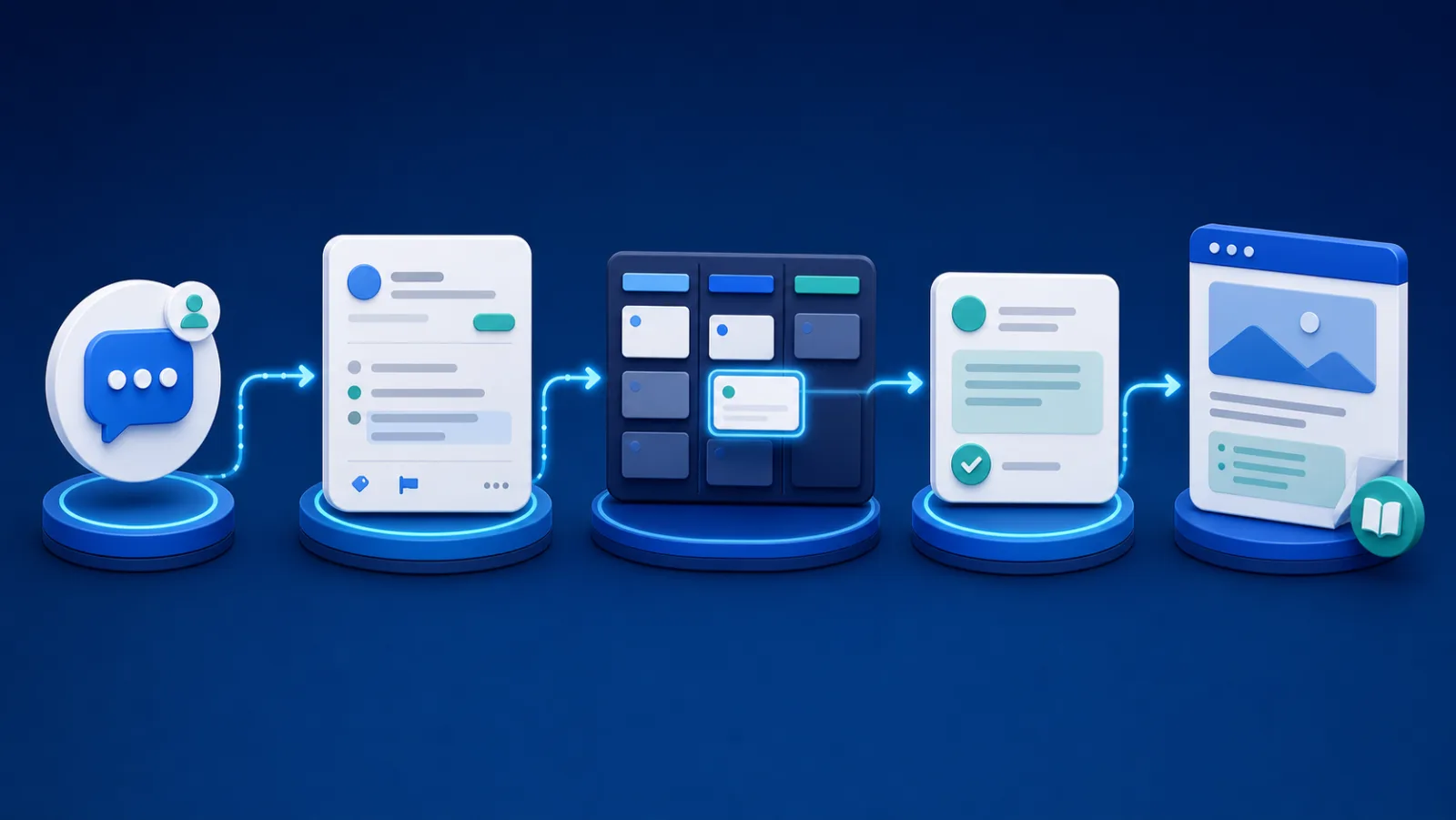
AI-generated illustration.
Founder-led support is valuable because the shortest path from a customer problem to a product decision is often one person. It becomes risky when requests live in private inboxes, follow-up depends on memory, and the same answer is rewritten every week.
The right tool should preserve direct customer contact while turning recurring work into a system. Bnder publishes this guide and is included in the shortlist; our review methodology describes the evaluation and commercial disclosure.
Recommended stack by operating model
| Operating model | Start with | Add only when needed |
|---|---|---|
| Support frequently becomes product work | Bnder | Status page or CRM |
| Email is the primary channel | Help Scout | Linear for product evidence |
| In-product chat drives support | Intercom or Crisp | Dedicated product tracker |
| Linear already owns delivery | Linear Customer Requests plus an inbox | Knowledge or CRM layer |
| High-value accounts need commercial context | CRM-centered service tool | Specialist support workflow |
The table describes stack shapes, not a requirement to buy several tools. Founder-led teams should prefer one clear source of truth until a repeated workflow proves a specialist is worth another integration.
The minimum useful support stack
A founder-led SaaS company usually needs five jobs covered: receive requests, track ownership, connect product work, publish stable answers, and understand the customer. One product may cover several jobs; adding a specialist is justified only when its workflow is used often.
Bnder: tickets, product work, and documentation
Bnder covers the complete loop from email or form intake to ticket, linked task, customer update, and help article. It is the strongest central tool when support regularly changes the roadmap or reveals bugs.
Help Scout: structured customer email
Help Scout is a good upgrade from a shared Gmail address. Assignment, conversation history, saved replies, Docs, Beacon, and reporting create accountability without making every interaction feel like a case-management process.
Intercom or Crisp: live conversations
Intercom is suited to companies investing in in-product messaging, AI, automation, and proactive engagement. Crisp is a smaller-scope candidate for live chat and shared messaging. Do not add chat solely because competitors have it; synchronous support creates an availability promise.
Linear Customer Requests: product evidence
Linear Customer Requests helps product teams attach customer evidence to development work. It is useful when Linear is already the delivery system and the central problem is aggregating requests from support, email, CRM, or Slack.
A CRM only when account context demands it
HubSpot and other CRMs can give support a complete commercial record, but early SaaS teams often need far less. Add CRM-centered service software when account ownership, lifecycle, renewals, and sales context materially affect support—not as a default component.
A public status page for incidents
A help desk is not an incident broadcast system. Once downtime affects multiple customers, use a public status page and link it from support responses. This reduces duplicate questions and gives customers one authoritative update channel.
The founder-led operating rhythm
Review open customer requests daily, group duplicates around the same underlying work, and publish documentation after repeatable resolutions. Once a week, inspect which requests consumed the most time and which product tasks still lack a customer follow-up owner.
Start with Bnder when you want the fewest boundaries. Combine Help Scout with Linear when each specialized experience is worth maintaining. Add Intercom or Crisp only when live conversations are a deliberate channel, and add CRM depth when commercial context proves necessary.
Frequently asked questions
When should a founder hire support instead of adding more software?
Hire when customer coverage, response time, language, or specialization is the constraint. Software helps with ownership and repetition; it does not create judgment or availability. If founders are consistently delaying product work despite a clean queue and good documentation, headcount is the likely bottleneck.
Which support metric is useful at the founder-led stage?
Track unresolved customer problems and time to a meaningful next response before building a large dashboard. Also review how many tickets created product work and whether those customers received a closing update. Those measures expose broken loops that average reply time can hide.