Bnder · Aug 3, 2026
Best Customer Support Software for Plugins, Extensions, and DevTools
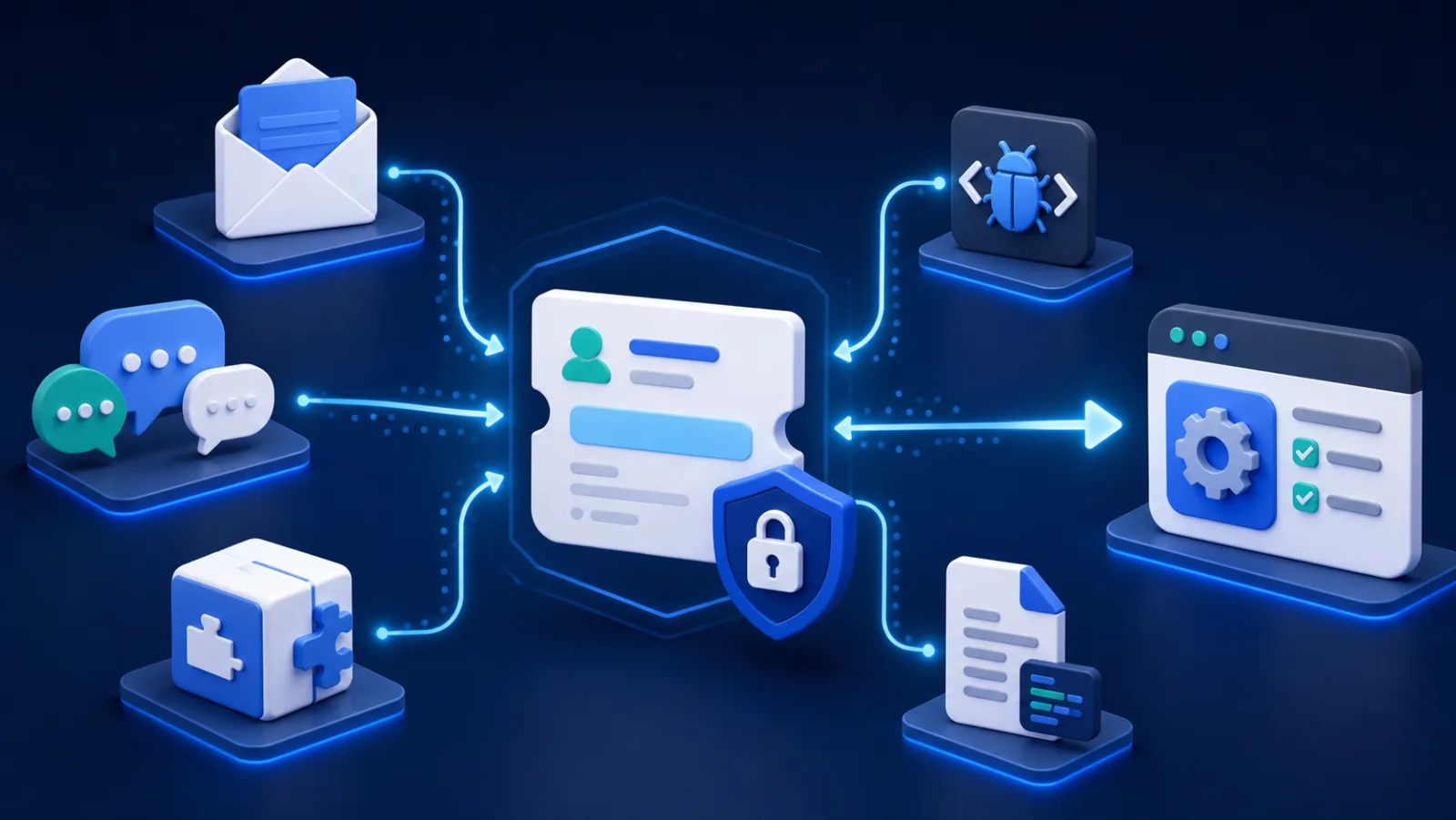
AI-generated illustration.
Support for a plugin, extension, SDK, API, or developer tool is unusually close to engineering. Reports depend on versions, browsers, runtimes, logs, configuration, and reproduction steps. A generic “How can we help?” box usually creates a second round of questions before investigation can begin.
Bnder publishes this guide and explicitly serves small technical-product teams. The comparison focuses on diagnostic intake and product follow-through under our public review methodology.
Technical-support tools compared
| Product | Best for | Diagnostic intake approach |
|---|---|---|
| Bnder | Small teams connecting reports to fixes | Structured portal, tickets, and linked tasks |
| Jira Service Management | Jira-centered technical operations | Configurable request types and Jira workflows |
| Intercom | Authenticated SaaS and in-product support | Messenger, forms, and ticket types |
| Freshdesk | Dedicated multichannel support | Custom fields, portal, and routing |
| Help Scout | Email-led technical support | Shared inbox, Docs, and Beacon |
| GitHub Issues | Public open-source products | Public issue forms and templates |
What technical support needs
- structured fields for product and environment versions;
- attachments or logs with appropriate privacy controls;
- duplicate detection or grouping for widespread issues;
- a linked engineering task with the original evidence;
- public known-issue and workaround documentation;
- email and community intake where users already ask questions;
- an export path for long-term ownership.
Bnder: best for request-to-fix continuity
Bnder collects structured reports as tickets, links confirmed issues to product tasks, and turns stable resolutions into public help documents. Discord support is available for products whose community already lives there. This makes it a strong fit for small teams where engineering and support overlap.
Jira Service Management: best for Jira-centered development
Jira Service Management connects request management to Jira and adds incident, problem, change, asset, and knowledge workflows. It is powerful for technical organizations already standardized on Atlassian, with more process and configuration than many plugin teams need.
Intercom: best for in-product technical conversations
Intercom supports Messenger conversations, ticket forms, tracker tickets, customer updates, automation, and AI. It works well when users are authenticated inside a SaaS product and support begins in the application. Desktop plugins and command-line tools may need a different intake surface.
Freshdesk: best broad technical help desk
Freshdesk combines customizable ticket forms, portals, knowledge, routing, SLAs, collaboration, and analytics. It suits teams building a dedicated technical-support operation across multiple channels.
Help Scout: best for documentation plus email
Help Scout combines customer conversations with Docs and an embedded support hub. It is a good option when most technical requests arrive by email and the team wants straightforward self-service. Engineering work will normally move through an integration.
GitHub Issues is not always a customer portal
Public issues are excellent for open-source collaboration, transparent bugs, and contributor discussion. They are a poor fit for account details, private logs, billing questions, or reports containing sensitive information. Many technical products need both a public engineering channel and a private support path.
Recommended evaluation
Submit the same compatibility report to every candidate: product version, host version, operating system, expected behavior, actual behavior, steps, and a private attachment. Confirm what customers can see, how duplicates are grouped, how engineering receives it, and how affected users are updated.
Choose the tool that preserves technical evidence without forcing customers to understand your internal tracker.
Frequently asked questions
Which diagnostic fields should vary by product type?
Browser extensions need browser version, extension version, URL context, and conflicting extensions. Plugins need host application, plugin version, runtime, and active configuration. APIs and SDKs need endpoint or method, client version, request identifiers, sanitized payloads, and response codes. Use conditional fields instead of one enormous form.
How should technical-support teams handle logs?
Explain how to redact tokens, personal data, file paths, and customer content before upload. Restrict access, set retention, and provide a separate security-reporting route. Never make a public issue tracker the default destination for unsanitized logs.